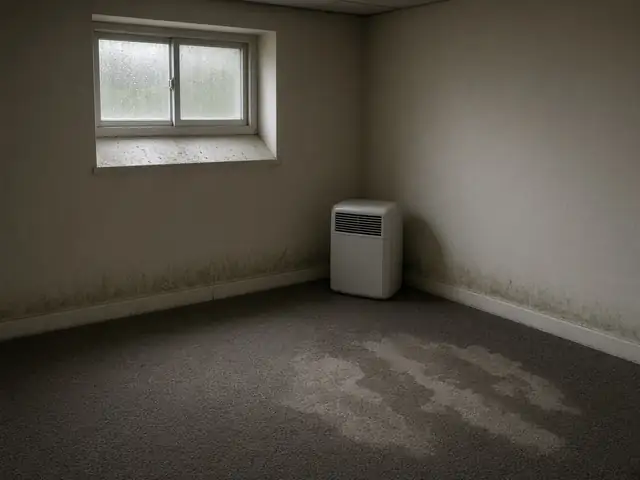
Common sources of a musty smell
| Where | What to look for |
|---|---|
| Basement | Damp walls, efflorescence, wet carpet or cardboard, a smell after rain |
| Crawl space | Wet soil, torn vapor barrier, condensation on ducts, mold on joists |
| HVAC system | Clogged condensate drain, standing water in the pan, dirty coil, moldy duct insulation |
| Bathrooms | No exhaust fan or one that vents into the attic, leaks around the tub or toilet |
| Kitchen and laundry | Slow leaks under the sink or behind the dishwasher, front-load washer gaskets |
| Walls and ceilings | Stains, bubbling paint, soft drywall below windows or plumbing |
| Attic | Roof leaks, dark staining on the sheathing, bath fans venting into the attic |
Why Charlottesville homes get musty
The median Charlottesville home was built in 1967, and 64% were built before 1980, and many older homes have vented crawl spaces or basements with original drainage. USDA soil data flags a shallow water table on about 5% of Charlottesville city and 8% of Albemarle County. Central Virginia summers are humid, and humid outdoor air entering a crawl space or basement condenses on cooler surfaces. Air from the crawl space and basement moves up into the living space, so a damp crawl space can make the whole house smell.
How to find the source yourself
- Follow your nose. Note which rooms smell strongest and when: after rain, when the AC starts, or in the morning.
- Check humidity. An inexpensive hygrometer will show whether rooms are above 60%.
- Look low. Check the basement or crawl space with a flashlight for water, staining and growth.
- Check the HVAC. Look at the condensate drain and pan, and the filter.
- Check under sinks and behind the washer, dishwasher and refrigerator.
- Look for staining on ceilings, below windows and around tubs.
What to do once you find it
- Fix the leak, drainage or humidity problem first.
- Dry wet materials within 24 to 48 hours.
- Clean small areas of growth (under about 10 square feet) with detergent and water.
- Remove porous materials, such as carpet pad or drywall, that stayed wet.
- Run a dehumidifier in the basement or crawl space if humidity stays high.
- Call a certified remediator for larger areas. See mold remediation.
When to schedule mold testing
Schedule testing when the smell persists after you have fixed the obvious causes, when you cannot find the source, when someone in the home has asthma or allergy symptoms, or when you are buying the house. An inspector uses moisture meters and thermal imaging to find hidden damp areas and can take air samples to compare with outdoors. See mold inspection and indoor air quality testing.
Musty smell vs other odors
- Musty or earthy: mold, mildew or damp materials.
- Rotten egg: could be sewer gas from a dry drain trap or, with natural gas service, a gas leak. Leave and call the gas company if you suspect gas.
- Sour or stale: poor ventilation or a dirty HVAC system.
- Ammonia or urine: pests in the attic, walls or crawl space.
Musty smell by season
In Charlottesville, musty smells often peak in late spring and summer, when outdoor humidity is high and air conditioning creates cool surfaces where moisture condenses. A smell that appears after heavy rain points to water getting into a basement or crawl space. A smell that appears when the heat first runs in fall can point to dust and growth in ducts or a damp air handler closet. Noting when the smell is worst is one of the most useful things you can tell an inspector.
Do not just cover it up
Air fresheners, candles and ozone generators do not fix the cause. EPA cautions that ozone generators sold as air cleaners can harm health, and that ozone at levels safe to breathe does little to remove mold or many odor-causing chemicals. Fix the moisture, then clean.
Frequently asked questions
Why does my house smell musty but I can't find mold?
Musty odors come from gases released by mold and bacteria growing on damp materials, often somewhere you cannot see: a crawl space, inside a wall, under carpet, in an HVAC drain pan or ducts. High humidity alone can make a house smell stale. A moisture survey usually finds the source.
Why does my basement smell musty after rain?
Rain saturates the soil, and water or water vapor comes through the walls and floor. Damp concrete, cardboard, carpet and drywall then grow mold or mildew. Check gutters, downspouts and grading first.
Is a musty smell dangerous?
The smell itself is a sign of moisture and microbial growth. Mold can trigger allergy and asthma symptoms in sensitive people. Find and fix the source rather than masking it.
Can my air conditioner cause a musty smell?
Yes. A clogged condensate drain, a dirty coil, standing water in the drain pan, or moldy duct insulation can all smell musty, especially when the system starts up.
Will a dehumidifier get rid of a musty smell?
Lowering humidity below 60% often reduces or stops the smell, but if mold is already growing, the growth still has to be cleaned or removed.
How it works
- Tell us what is going onMusty smell, visible growth, a past leak or a home purchase. Choose testing, removal or both.
- A local mold specialist contacts youUsually within one business day, to schedule testing or a removal estimate.
- Get results and a written quoteRemoval is quoted by a certified remediation company. You decide whether to go ahead.
Schedule mold testing in Charlottesville
Testing, removal or both. A local specialist will contact you, usually within one business day. Free quote, no obligation.
Sources
- USDA soil survey summary, Charlottesville city: https://foundationsoils.com/va/charlottesville-city/
- Charlottesville housing, median year built (ACS via City Stats): https://city-stats.com/virginia/counties/charlottesville-city/housing/
- EPA map of radon zones: https://www.epa.gov/radon/epa-map-radon-zones
- EPA, A Brief Guide to Mold, Moisture and Your Home: https://www.epa.gov/mold/brief-guide-mold-moisture-and-your-home
- EPA, Introduction to indoor air quality: https://www.epa.gov/indoor-air-quality-iaq/introduction-indoor-air-quality
- EPA, Ozone generators that are sold as air cleaners: https://www.epa.gov/indoor-air-quality-iaq/ozone-generators-are-sold-air-cleaners